Active Mobility, Balance & Repair Blueprint
A simple system to reclaim joint control, structural stability, and movement freedom.
Blueprint Purpose
This Blueprint restores the active joint control, balance, and tissue elasticity your body needs to move with total freedom. It bridges the gap between raw strength and fluid movement—re-educating your nervous system to stabilize your frame, prevent joint wear-and-tear, and eliminate the balance mistakes that lead to age-related falls.
The Longevity Framework Placement & Scope
In a complete healthspan routine, structural longevity requires both Force Production (Strength Activation) and Decompression & Elasticity (Mobility & Balance).
Please Note: This Blueprint establishes your Decompression & Elasticity baseline. This is not a passive, relaxing stretching guide where you space out on the floor. It is a highly active, low-fatigue movement protocol that teaches your brain how to control and protect your joints at their physical limits. It serves as your daily insurance policy against structural injury, kinetic imbalances, and real-world slips or falls.
Why This Matters
Modern life creates a highly static environment that blinds your nervous system. When you sit for hours, your brain literally forgets how to communicate with the deep stabilizing receptors of your joints and feet, leading to joint degradation and poor balance.
A synchronized active mobility and balance protocol actively regulates:
- Proprioception (Your Body's Internal GPS): Stimulates the specialized nerve endings inside your joints and ligaments. This sharpens your brain's spatial awareness, allowing for split-second balance corrections when you trip or stumble.
- Active End-Range Control: Building strength at the outer edges of your joint capacity. Flexibility is useless if your muscles are weak at their widest angles; active mobility ensures your joints can safely handle unexpected real-world twists or strains.
- Fascial Hydration (The Body’s Internal Glideways): Fascia is a continuous, fluid-filled structural web wrapped around your muscles. Intentional, circular movement prevents these layers from drying out and sticking together, restoring natural, pain-free movement elasticity.
- Foot and Ankle Complex Resilience: Re-educates the 26 bones and dozens of small muscles in the human foot to act as a dynamic, shock-absorbing tripod, directly stabilizing the knees, hips, and lower back.
True mobility is an active contract between your muscles, your joints, and your central nervous system.
The Blueprint (Step‑by‑Step System)
1. The Morning Neuro-Priming & Balance Reset (3 minutes)
Execute an active, joint-mapping and balance-priming sequence immediately upon waking to unlock your structural frame and wake up your brain's stability centers.
- The Biology: Sleeping turns down your internal balance system and pools fluid in your muscle layers. Actively rotating your joints under light tension forces your brain to re-map your physical boundaries and instantly fires up your stabilizing nervous system.
- Active Neck & Shoulder Rotations (Joint Mapping): Stand tall with your feet rooted. Slowly rotate your neck through its absolute maximum circular limit under self-generated muscular tension for 30 seconds. Repeat this slow, intentional circle with each shoulder, carving out the air as if moving through thick water.
- The Standing Tripod Balance: Stand on your left leg for 45 seconds while keeping your right foot hovering a few inches off the floor. Focus on gripping the floor using three distinct points: your heel, the base of your big toe, and the base of your pinky toe. Switch legs. Advanced progression: Close your eyes to force your inner ear and feet to manage your balance without visual assistance.
2. The Midday Structural Slack Release (1–2 minutes)
Deploy brief, active movement breaks throughout your working day to counter static desk postures, wake up dormant glutes, and reset vertical alignment.
- The Biology: Prolonged sitting glues the hip flexors short and entirely shuts down the gluteal (butt) muscles. This structural imbalance pulls the pelvis out of alignment and forces the lower back to take the brunt of daily impacts.
- The Active Hip Hinge & Reach: Stand with your feet hip-width apart. Actively push your hips straight backward as if trying to touch a wall behind you, while reaching your arms as far forward as possible. Maintain a flat spine. Squeeze your glutes tightly to stand back up. Perform 5 slow, deep repetitions.
- The Single-Leg Clock Reaches: Stand on one leg with a slightly soft knee. Actively reach your non-supporting foot out to tap 12 o'clock, 3 o'clock, and 6 o'clock on an imaginary circle around you, then return to the center. Perform 3 smooth rounds per leg to actively fire up the side hip stabilizers.
3. The Evening Joint Decompression Flow (3–5 minutes)
Conclude your day with an active tissue mobilization sequence to decompress your spine and smoothly shift your nervous system into a deep recovery state.
- The Biology: Holding a position while actively contracting the opposing muscle groups forces stubborn, tight tissues to fully release. Pairing this mechanical release with long exhalations down-regulates the nervous system, prepping your body for deep tissue repair during sleep.
- Active Couch Stretch / Hip Flexor Pulse: Kneel on your left knee with your right foot forward. Actively squeeze your left glute as hard as possible for 5 seconds to force the front of your left hip to release, then gently press forward into the space. Repeat this contract-and-release pattern 5 times per side.
- Active Thoracic (Upper Back) Openers: Lie on your side with your knees stacked at a 90-degree angle. Reach your top arm up and completely over across your body, attempting to touch the back of your shoulder to the floor. Actively press your knees down into the floor to isolate your upper back. Complete 5 slow, breath-paced reps per side.
4. The Weekly Deep Active Repair Session (10–15 minutes)
Once per week, dedicate a focused session to self-directed soft tissue release and intensive end-range positional holds.
- The Biology: Over a training week, repetitive loading creates micro-restrictions (knots) in muscle fibers. Using targeted focal pressure clears out these tight restrictions, which is immediately followed by active holds to lock in and secure the newly created movement space.
- Myofascial Trigger-Point Scanning: Spend 5 minutes utilizing a dense massage ball or a foam roller to slowly roll the bottoms of your feet, calves, glutes, and upper back. When you find a highly tender area, pause entirely, melt your bodyweight over the tool, and take 3 deep nasal breaths until you feel the tissue release.
- Active Hamstring Lengthening (Contract-Relax Method): Sit on the floor and loop a stretching strap around your foot. Lie back, raise your leg until you feel a light stretch in the hamstring, and hold for 10 seconds. Now, actively push your heel down toward the floor against the resistance of the strap for 5 seconds (contracting the hamstring). Relax, take a deep nasal exhale, and gently pull the leg a fraction deeper into a new, comfortable range. Repeat 3 times per leg.
Timing & Frequency Matrix
To ensure your body remains completely fluid, stable, and pain-free, execute your protocols across these targets:
- Daily Neuromuscular Anchors: Complete your 3-minute Morning Reset upon waking, and your 3–5 minute Decompression Flow right before bed.
- The Midday Desk Reset: Interject a 1–2 minute structural slack release for every 90 to 120 minutes of continuous desk work or sitting.
- Weekly Deep Maintenance: Execute your 10–15 minute Deep Active Repair session once per week on an active recovery day or a weekend afternoon.
- Post-Training Integration: The evening decompression steps can be deployed immediately following a Strength Activation or Metabolic Conditioning session to safely reset resting muscle tone.
Common Mistakes
- Relying on Lazy, Passive Stretching: Simply flopping into a position and flopping out. If your brain and muscles are not actively engaged in controlling the position, no long-term stability or mobility is built.
- Holding Your Breath During Balance Work: Straining, locking your joints, or holding your breath while balancing. True balance is fluid and relaxed; if you cannot breathe nasally, your brain is panicking rather than adapting.
- The Injury-Only Reactive Habit: Neglecting your stability work until you pull a muscle or twist an ankle. Active mobility is a proactive biological shield, not a post-injury fix.
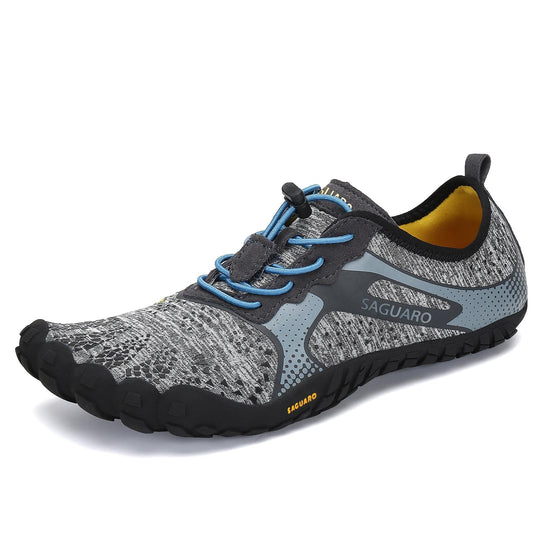
- Training Exclusively in Thick, Cushioned Shoes: Keeping your feet locked in heavily cushioned shoes all day, which numbs the sensory receptors on the bottoms of your feet and slowly destroys your baseline balance.
- Forcing Through Painful Pinch Points: Pushing a joint aggressively into a sharp, structural pinch. Always work around a joint restriction with smooth, non-painful tension; never force a bone-on-bone blockage.
How This Blueprint Integrates With Other Principles
- Supports Movement by giving your joints the active, uncompromised ranges of motion and reflexive balance required to move through the world fearlessly.
- Supports Strength by clearing out kinetic restrictions, allowing for deeper squats, safer overhead presses, and a massive reduction in training compensation injuries.
- Supports Stress Regulation by utilizing active, highly focused neurological tracking to center the mind and quiet a racing, overstimulated brain.
- Supports Sleep by systematically draining hidden physical tension from your frame, allowing your body to drop into a deep, uninterrupted state of nocturnal repair.
Tools & Essentials for this Blueprint
To support the physiological pathways outlined above, we have curated a selection of high-purity, evidence-backed essentials. We are constantly vetting and curating new products to align with our principles and longevity goals, so this collection will continue to evolve. You can explore the options currently available to support your daily routine in the collection below.
Closing Note
Flexibility is passive, but mobility and balance are power. Re-map your framework, claim your edges, and let your body keep you stable.
A Note on Our Blueprints: All information, protocols, and product suggestions provided here are for educational and lifestyle optimization purposes only. They are designed to support your general vitality and wellness baseline; they do not constitute medical advice, nor are they intended to diagnose, treat, or cure any health condition. Always consult a qualified healthcare professional before starting any new routine.